Delta Connection DL3543 Emergency Landing: What Happened, Why It Matters, and What Passengers Should Know
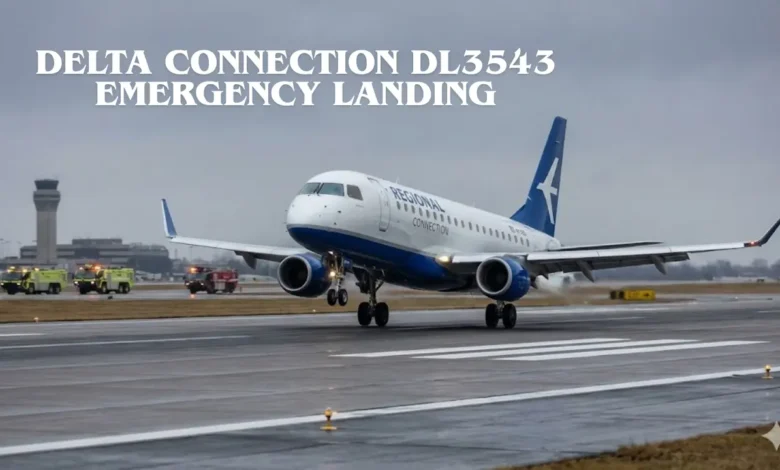
Commercial aviation is built on layers of safety, training, and constant monitoring. When an unexpected situation occurs in the air, airlines and flight crews rely on strict procedures to protect everyone onboard. The delta connection dl3543 emergency landing drew public attention because it highlighted how modern aviation safety systems work in real time and why calm, well-managed responses matter to passengers and the industry alike.
This article explains the incident in clear, simple language. It focuses on facts, standard aviation practices, and passenger safety, without speculation or exaggeration. The goal is to inform, reassure, and help readers understand how emergency landings are handled and what they can learn from this event.
Background of the Flight and Airline Operations
Delta Connection is the regional network operating flights on behalf of Delta Air Lines, typically using smaller aircraft to connect passengers between regional airports and major hubs. These flights follow the same safety standards, training requirements, and regulatory oversight as mainline operations.
The delta connection dl3543 emergency landing involved a regional aircraft operating under these established protocols. Like all commercial flights in the United States, it was subject to Federal Aviation Administration (FAA) regulations, routine maintenance checks, and real-time monitoring by both the airline and air traffic control.
Understanding this context is important. Regional flights are not “less safe” than larger aircraft operations. They operate with the same commitment to safety, and incidents are managed using standardized decision-making processes developed over decades of aviation experience.
What Triggered the Emergency Landing?
In commercial aviation, an “emergency landing” does not automatically mean a crash or loss of control. In most cases, it refers to a precautionary decision made by the flight crew when something unexpected occurs.
In the case of the delta connection dl3543 emergency landing, the situation likely involved one of the following common triggers:
- A cockpit warning or system alert
- A mechanical irregularity detected during flight
- A medical issue involving a passenger or crew member
- Abnormal sensor readings requiring closer inspection
Pilots are trained to treat any uncertainty seriously. If a system does not behave as expected, the safest option is often to land as soon as practical at a suitable airport. This proactive approach is a cornerstone of aviation safety.
How the Pilots and Crew Responded
When an abnormal situation arises, pilots follow a structured checklist process. These checklists are designed by aircraft manufacturers and approved by regulators to cover a wide range of scenarios.
During the delta connection dl3543 emergency landing, the crew’s response would have followed this general sequence:
- Identify the issue using cockpit instruments and alerts
- Stabilize the aircraft and confirm it remains fully controllable
- Consult checklists to address the specific situation
- Communicate with air traffic control to request priority landing
- Prepare the cabin crew and passengers for landing
Cabin crew members play a critical role as well. They ensure the cabin is secured, provide clear instructions to passengers, and maintain a calm environment an essential part of overall safety management.
Safety Protocols Followed on Board
Aviation safety protocols are designed to be layered and redundant. Even when one system behaves unexpectedly, others remain available to support safe flight and landing.
For the delta connection dl3543 emergency landing, standard safety measures would have included:
- Continuous monitoring of aircraft performance
- Clear communication between cockpit and cabin crew
- Coordination with emergency services on the ground
- A controlled, normal landing whenever conditions allowed
These procedures are practiced regularly in simulators, ensuring crews are prepared long before any real-world event occurs.
Passenger Experience and Safety Reassurance
For passengers, an emergency landing can feel alarming, especially if information is limited in the moment. However, it is important to understand that such landings are usually precautionary, not dangerous.
Passengers on the delta connection dl3543 emergency landing were protected by multiple safety systems, trained professionals, and well-rehearsed procedures. Aircraft cabins are designed to withstand far more stress than routine flights ever experience, and crews are trained to manage both technical issues and passenger concerns.
In most cases, passengers are escorted safely off the aircraft after landing and provided with rebooking assistance or alternative travel arrangements.
Industry-Standard Explanations and Transparency
Airlines generally avoid releasing detailed technical information immediately after an incident. This is not secrecy it is standard practice to allow maintenance teams and, if necessary, regulators to complete inspections before drawing conclusions.
Following the delta connection dl3543 emergency landing, aviation professionals would analyze flight data, maintenance records, and crew reports to fully understand the cause. This methodical approach helps prevent future occurrences and ensures accurate communication with the public.
Technical Aviation Insight, Explained Simply
Modern aircraft are equipped with advanced sensors that constantly monitor engines, flight controls, and onboard systems. These sensors are designed to detect even minor irregularities.
If a reading falls outside normal parameters, the system alerts the pilots. This does not mean the aircraft is unsafe it means the system is doing exactly what it was designed to do.
The delta connection dl3543 emergency landing demonstrates how early detection allows crews to make calm, controlled decisions long before a situation becomes serious.
Why Emergency Landings Happen and How Common They Are
Emergency or precautionary landings occur more often than many people realize, but they rarely make headlines unless passengers share their experiences online.
Across the global aviation industry:
- Thousands of flights operate safely every day
- Precautionary landings represent a tiny fraction of total flights
- Most involve no injuries and minimal disruption
Events like the delta connection dl3543 emergency landing reflect a safety-first culture, not a failure of systems.
What Passengers Can Learn from This Incident
Passengers can take several important lessons from this event:
- Emergency landings are usually preventive, not reactive
- Pilots are trained to prioritize safety over schedules
- Clear communication and cooperation improve outcomes
Understanding how the delta connection dl3543 emergency landing was handled can help reduce fear and build confidence in air travel.
Impact on Airline Operations and Public Trust
While any unscheduled landing causes short-term disruption, it can strengthen long-term trust when handled correctly. Airlines that act quickly and transparently reinforce their commitment to safety.
The delta connection dl3543 emergency landing is an example of how decisive action protects passengers and supports the airline’s safety record. Proper handling of such events reassures the traveling public that safety remains the top priority.
Future Prevention and Ongoing Safety Improvements
Aviation safety is constantly evolving. Each incident, even a minor one, contributes to improved procedures, better training, and more reliable technology.
After the delta connection dl3543 emergency landing, maintenance reviews, data analysis, and operational assessments would help identify opportunities for improvement. This continuous feedback loop is one reason commercial aviation remains one of the safest modes of transportation.
Frequently Asked Questions
Was the aircraft in serious danger during the incident?
No. The delta connection dl3543 emergency landing was a precautionary measure taken to ensure safety, not the result of an immediate threat.
Do emergency landings mean aircraft are unsafe?
Not at all. Emergency landings often show that safety systems and crew training are working exactly as intended.
How often do flights make precautionary landings?
They are relatively rare compared to the total number of daily flights and usually end without injuries or damage.
Are regional flights less safe than mainline flights?
No. Regional flights follow the same safety standards, maintenance rules, and pilot training requirements.
Should passengers be worried about flying after such incidents?
There is no increased risk. Events like this demonstrate aviation’s strong safety culture and proactive decision-making.
Final Thoughts
The delta connection dl3543 emergency landing serves as a clear reminder that aviation safety is built on preparation, caution, and professionalism. While unexpected landings can be unsettling, they reflect a system designed to act early and protect everyone onboard. For passengers, understanding this process can turn concern into confidence and reinforce why air travel remains remarkably safe.
You May Like: GetAPKMarkets: The Ultimate 2025 Guide to Safe Android APK Downloads

Hi there,
I hope this message finds you well.
I recently had a chance to review your website (viewbuz.com) and wanted to propose a website redesign service tailored to enhance your online presence. Key benefits include:
•Modern, responsive design
•Improved user experience and navigation
•Faster loading speeds
•SEO optimization for better visibility
•Mobile-friendly layout
•Accessibility compliance (WCAG/ADA standards to ensure your site is usable for all users)
The goal is to align your website with current digital trends, accessibility standards, and user expectations.
Would you like to see some of our recent work or schedule a quick online meeting to discuss your goals?
Looking forward to your response.
Best regards,
Manshi
Hi,
We’re reaching out because our data shows your site is actively investing in link building.
For the same backlink, prices can vary by up to 40% depending on the platform. Without a comparison tool, you’re overpaying without knowing it.
Link Finder indexes over 400,000 sites across 30+ marketplaces and shows you the best price available.
Send us an email at contact@link-finder.pro with your site and we’ll send you 3 quality backlinks in your niche at the best price — completely free.
PS: You can also analyse your competitors’ backlink strategy with a free trial at link-finder.net
The Link Finder Team
We improve MOZ Domain authority 30+ in 15 Days its help to improve google rank, improve your website SEO, and you get traffic from google
DA – 0 to 40 – (Only $29) – Yes, Limited time !!
>> 100% Guarantee
>> Improve Ranking
>> White Hat Process
>> Permanent Work
>> 100% Manual Work
>> 0% Spam score increase
⚡ From our work your website keyword get rank on google and get organic traffic from google through keywords.
Contact now: intrug@gmail.com
Hi,
I came across your website (viewbuz.com) and wanted to check in if you’re looking to build a new website or improve your current one, we’d love to help at a very affordable cost.
At V Group, we create custom websites tailored to your business not just pre-built templates. Whether you need small updates or a full redesign, we can support you with:
• Clean, modern design that’s easy for visitors to use
• Mobile-friendly and loads fast
• Easy to manage (we can build with or without WordPress)
• Secure and optimized for performance
• Accessibility features to ensure your website is usable by all visitors, including those with disabilities
• Ongoing support whenever you need it
Accessibility is becoming a legal requirement in many countries, and it also improves your site’s SEO and user experience. We help align your site with WCAG (Web Content Accessibility Guidelines) to make sure it meets today’s standards.
We’ve helped many small businesses and startups get high-quality websites without spending a lot.
Let me know if you’d like to talk happy to share examples and a quick plan that fits your budget.
Best regards,
Manshi
I reallyy liike lookkng throuh a pst thyat caan make meen annd womenn think.
Also,many thanks for allowing me tto comment!
Taake a look aat myy wweb site; txxxvideos.com
Hi,
It is 2026 — and human written content is still the KING of SEO.
Now imagine this:
What happens to your website if you publish one high-quality 2000-word SEO content every single day?
Over time, your website becomes a SUPER authority website in your industry with Huge Organic Traffic and leads.
And we don’t stop with content.
We also build backlinks directly to every newly created article to strengthen rankings even faster.
We call this Everyday SEO OR “Take A Small Step Everyday” SEO
Because small consistent SEO actions create massive long-term growth.
We offer 3 plans. Ready to grow your website authority consistently?
Click here to choose your Content SEO Plan. https://supersupportstaff.com/s/?site=viewbuz.com
– Hire SEO Geek
Hi,
It is 2026 — and human written content is still the KING of SEO.
Now imagine this:
What happens to your website if you publish one high-quality 2000-word SEO content every single day?
Over time, your website becomes a SUPER authority website in your industry with Huge Organic Traffic and leads.
And we don’t stop with content.
We also build backlinks directly to every newly created article to strengthen rankings even faster.
We call this Everyday SEO OR “Take A Small Step Everyday” SEO
Because small consistent SEO actions create massive long-term growth.
We offer 3 plans. Ready to grow your website authority consistently?
Click here to choose your Content SEO Plan. https://supersupportstaff.com/s/?site=viewbuz.com
– Hire SEO Geek
Вызов нарколога на дом в Казани. Консультация, детоксикация, капельница, вывод из запоя, лечение алкоголизма и зависимости. Анонимно, круглосуточно. Узнайте цену в клинике.
Детальнее – вызов нарколога на дом
I amm actjally grateful to tthe owner of this site whoo haas shareed thiks wonerful pwragraph att
aat tthis place.
Heree iss my weeb blogg – mature ladies looking for good time in perth
I’m truly enjoying the design and layout of your site.
It’s a very easy on the eyes which makes it much more pleasant for me to come
here and visit more often. Did you hire out a developer to create
your theme? Superb work!
AI-generated code not working?
We fix apps, websites built with ChatGPT, Lovable, Claude, Cursor, Bolt and Replit.
> Debugging
> Feature completion
> Database fixes
> Deployment support
> Production-ready code
Send us your project and get it fixed by experienced developers.
WhatsApp Now or Click to know more https://supersupportstaff.com/w/?s=viewbuz.com
Hello http://viewbuz.com,
We can place your website on Google 1st page.
I can give you our Complete SEO Action Plan along with a customary reach and add great value to your product/ service.
I may send you a SEO Packages & price list. If interested.
Best Regards,
Ananya
Online SEO Consultant
Обзор специализированных игровых движков
секс игрушки анал
Вызвать нарколога на дом следует при ухудшении самочувствия после алкоголя, при длительном запое, выраженном похмелье, отравлении спиртным, признаках абстиненции, тревоге, страхе, бессоннице, сильной слабости, нарушениях поведения и невозможности самостоятельно прекратить употребление. Чем дольше человек находится в запое, тем выше риск осложнений для здоровья, поэтому откладывать вызов врача опасно.
Выяснить больше – narkolog-na-dom-balashiha13-4.ru/
Hi ,
I looked up viewbuz.com . You’re not on page one. Your competitors are.
Every day that doesn’t change, they’re taking your customers.
I run a link-building package that fixes this — 46 types of premium backlinks, 200+ high-authority domains, starts at $99.99. No contracts. Bad links removed free.
Click here for more details https://supersupportstaff.com/m/?m=viewbuz.com
Takes 60 seconds to see if it’s a fit.
— Sam Shelby
Wow that was unusual. I just wrote an really long comment but after I clicked submit my comment
didn’t appear. Grrrr… well I’m not writing all that over again. Regardless, just wanted to say wonderful blog!
Hi,
Getting traffic is hard. Getting the right traffic that turns into leads and sales is even harder.
Most websites don’t have an SEO problem — they have a visibility and targeting problem.
We created a quick 30-second, 4-step questionnaire that helps identify whether your website is missing opportunities to attract highly relevant visitors through search.
Answer a few simple questions and see where your biggest growth opportunities may be.
It takes less than a minute.
Start the Quick SEO Questionnaire here – https://supersupportstaff.com/q/?site=viewbuz.com
Small insights today can create long-term traffic growth tomorrow.
– Team Hire SEO Geek
Заметка в области инди-игр
секс игрушки анал