How do Attic Temperatures Affect Solar Wiring Longevity?
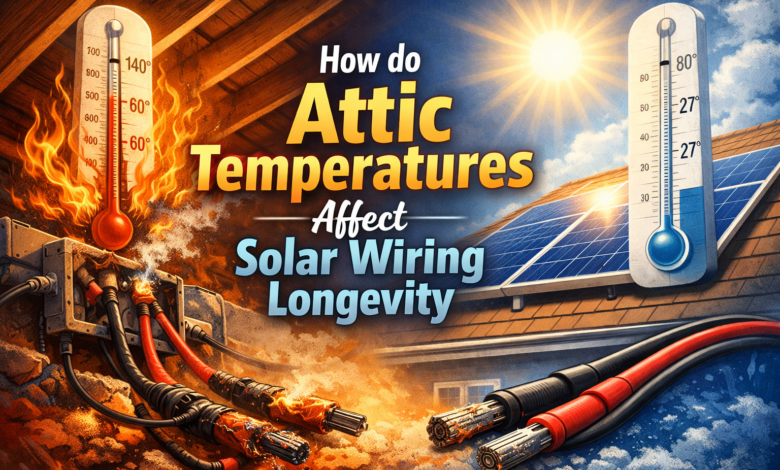
Solar wiring is designed to last for decades, but the environment it passes through can shorten its useful life. Attics are one of the harshest zones in many homes because temperatures can climb far above outdoor air, especially on sunny days when the roof deck radiates heat downward. When solar conductors run through these spaces, heat affects insulation, connector seals, and the long-term stability of cable jackets. Even if the system produces power normally, the wiring may be aging faster than expected if it is repeatedly exposed to high heat cycles. Attic temperature is also tied to ventilation, roof color, insulation levels, and duct leakage, so two nearby homes can have very different wiring conditions. Understanding how heat stresses wiring helps explain why routing choices, conductor sizing, and protection methods matter as much as panel placement.
How Attic Heat Impacts Wiring
- Insulation Aging and Thermal Cycling
Electrical wire insulation is a polymer material that slowly changes with heat exposure. High temperatures can accelerate hardening, brittleness, and microcracking over time, especially when the wire is repeatedly heated during the day and cooled at night. This daily expansion and contraction is called thermal cycling, and it can stress cable jackets, tie points, and bends where wire is routed around framing. Over the years, a coat that becomes less flexible is more vulnerable to abrasion from roof nails, sharp metal edges, or vibration-induced movement. Heat also affects the integrity of strain relief points and grommets where conductors pass through holes, because the surrounding materials can shrink or shift. When insulation is compromised, the risk of shorts, arc faults, or ground faults increases, which can trigger inverter shutdowns and reduce system uptime. The wiring may still pass visual inspection early on, but small changes in insulation can remain hidden until a fault appears during high production periods. This is why installers pay attention to cable rating and routing, because the hottest parts of an attic can age materials faster than the rest of the system.
- Ampacity Derating and Conductor Choices
Heat not only ages wiring; it also reduces how much current a conductor can safely carry. Electrical codes require ampacity derating when wires run through hot spaces, reducing the allowable current to prevent overheating. In solar systems, this matters because conductors may carry significant current for long periods during daylight hours. If wires are undersized or bundled tightly, heat buildup can worsen, raising conductor temperature even higher and further stressing the insulation. Smart designs account for attic temperatures when selecting wire gauge, conduit fill, and routing paths. For example, keeping conductors separated, avoiding tight bundles, and using conduit that allows heat dissipation can reduce thermal stress. Routing through cooler areas, such as along shaded eaves or through conditioned spaces when allowed, can also help. Homeowners often overlook derating because the system still works, but long-term performance depends on these thermal margins. A wire that operates closer to its maximum temperature rating day after day will generally age faster than one that runs cooler. Proper conductor sizing is a quiet form of durability, reducing both immediate heating and long-term material breakdown.
- Connector Reliability and Hot-Spot Risks
Connectors and terminations are often the weak link in any electrical system, and attic heat can amplify that vulnerability. Connection points can develop slightly higher resistance if they are not tightened properly, if corrosion begins, or if materials expand and contract over time. Higher resistance creates localized heating, which accelerates degradation, forming a feedback loop that can lead to hot spots and faults. Attics make this more likely because ambient temperatures are already high, reducing the connection’s cooling capacity. This is why installers focus on proper torque, compatible connectors, and clean terminations: small installation errors can escalate into major issues under heat stress. In places with hot summers, such as Sacramento, attic temperatures can remain elevated for long stretches, making the system’s hottest days also the days with the strongest solar production, when current is highest and the risk of hot spots increases. Proper junction box placement, ventilation around equipment, and avoiding unnecessary splices can reduce the number of heat-stressed connection points. When fewer terminations are present in the hot zone, there are fewer places for resistance and heat to concentrate.
Long-Term Wiring Health
Attic temperatures affect the longevity of solar wiring by accelerating insulation aging, increasing thermal cycling, and raising the risk of heat-related faults at connectors and terminations. High heat also triggers ampacity derating concerns, making conductor sizing and bundling practices critical for safe operation over long periods. When wiring runs near the roof deck or through poorly ventilated attics, daily heat stress can shorten material flexibility and increase vulnerability to abrasion and hot spots. Smart routing, careful termination practices, and designs that reduce exposure to peak attic temperatures help wiring stay stable for decades. By treating attic heat as a real design constraint, homeowners and installers protect system uptime, reduce troubleshooting events, and preserve the long-term value of the solar installation.