Lidarmos Understanding a Growing Concept in Spatial Data Technology
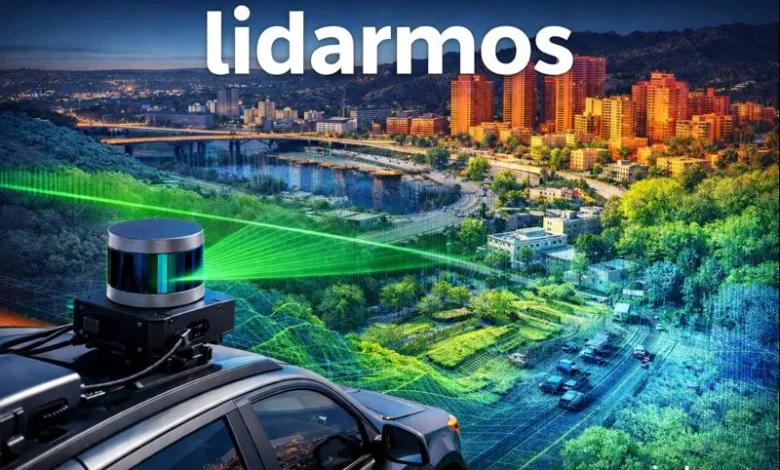
Lidarmos is an emerging concept that is gradually gaining recognition in fields that rely heavily on spatial data, advanced sensing, and accurate environmental modeling. Although it is not yet a universally defined industry term, lidarmos is increasingly used to describe structured systems that combine LiDAR data collection with modeling, simulation, and practical data use. These systems focus on turning raw spatial measurements into meaningful, usable information.
As industries become more data-driven, the need for precise and reliable spatial understanding continues to grow. Lidarmos reflects this shift by offering a framework that connects measurement, processing, and application. Rather than treating LiDAR data as isolated outputs, lidarmos emphasizes how that data can support planning, automation, and long-term decision-making.
The Basic Technology That Supports Lidarmos
To understand lidarmos, it is important to first understand the technology behind it. LiDAR, short for Light Detection and Ranging, works by emitting laser pulses and measuring the time it takes for those pulses to return after hitting an object. This process creates extremely accurate distance measurements, which are then used to build three-dimensional representations of real-world environments.
Lidarmos builds on this foundation by focusing on how LiDAR data is structured and applied. Instead of stopping at data capture, lidarmos systems are designed to organize, refine, and model spatial data so it can be used in simulations, analytics platforms, and operational systems. This makes the technology more useful beyond simple visualization.
How Lidarmos Systems Function in Practice
A typical lidarmos workflow begins with LiDAR sensors capturing data from the environment. These sensors may be mounted on vehicles, drones, tripods, or fixed infrastructure depending on the use case. The data collected forms dense point clouds that represent surfaces, objects, and terrain in fine detail.
Once collected, the data goes through several processing stages. Noise is filtered out, points are classified, and models are generated to represent meaningful features. Lidarmos systems often integrate this processed data into digital environments where it can be analyzed, simulated, or combined with other data sources. This structured approach allows organizations to move from raw measurement to actionable insight.
Real-World Applications of Lidarmos
Lidarmos has practical value across a wide range of industries. In urban planning and infrastructure development, it helps planners understand terrain, building layouts, and transportation networks before construction begins. Accurate spatial data reduces design errors and supports better long-term planning.
In transportation and autonomous systems, lidarmos plays a role in navigation and environment awareness. Vehicles and robots rely on precise spatial models to detect obstacles, plan routes, and operate safely. Environmental monitoring is another key area, where lidarmos supports land analysis, forest management, and coastal observation by providing consistent and repeatable measurements over time.
Lidarmos in Mapping and Surveying
Mapping and surveying are among the most established uses of LiDAR-based systems, and lidarmos enhances these applications by improving data usability. Traditional surveys can be time-consuming and limited in coverage, while lidarmos allows large areas to be captured quickly with high accuracy.
By organizing spatial data into structured models, lidarmos helps surveyors and engineers extract measurements, analyze changes, and maintain up-to-date records. This approach is particularly valuable for infrastructure maintenance, land development, and geographic analysis.
Advantages of Using Lidarmos-Based Approaches
One of the most important advantages of lidarmos is accuracy. High-resolution spatial data allows for precise measurements that reduce uncertainty in planning and analysis. This level of detail is difficult to achieve with traditional methods alone.
Efficiency is another key benefit. Automated data processing reduces the need for manual intervention, saving time and resources. Lidarmos also supports scalability, meaning systems can grow alongside project requirements without losing performance. These benefits make lidarmos suitable for both small-scale projects and large, complex operations.
Challenges Associated With Lidarmos
Despite its benefits, lidarmos also presents certain challenges. Processing and storing large volumes of spatial data requires powerful computing resources. Organizations must invest in suitable hardware and data management solutions to handle this demand.
Another challenge is expertise. Interpreting LiDAR data and models requires specialized knowledge. Without trained professionals, the full potential of lidarmos systems may not be realized. Addressing these challenges involves balancing technology investment with skill development and training.
The Role of Lidarmos in Data-Driven Decision Making
Accurate and timely data is essential for informed decisions, and lidarmos supports this need by providing reliable spatial insight. Decision-makers can visualize scenarios, evaluate alternatives, and test assumptions using detailed models rather than estimates.
This capability is especially valuable in high-risk or high-cost environments such as construction, transportation, and environmental management. Lidarmos reduces uncertainty and supports more confident decision-making by grounding choices in accurate data.
Lidarmos and System Integration
One of the defining characteristics of lidarmos is its focus on integration. Spatial data rarely exists in isolation, and lidarmos systems are designed to work alongside other digital platforms. This may include geographic information systems, simulation tools, or operational dashboards.
By integrating spatial data with other information sources, lidarmos enables a more complete understanding of complex environments. This holistic view supports collaboration across teams and improves the overall value of collected data.
Future Developments and Potential of Lidarmos
The future of lidarmos is closely tied to advances in computing, automation, and data analytics. As processing power increases, systems will be able to handle larger datasets more efficiently. Improvements in automation are expected to reduce manual processing and improve consistency.
There is also growing interest in combining lidarmos with predictive modeling and intelligent analysis. These developments may allow systems to anticipate changes, identify risks, and support proactive planning. As adoption grows, lidarmos is likely to become a standard component of modern spatial data ecosystems.
Lidarmos and Long-Term Data Value
Another important aspect of lidarmos is its contribution to long-term data value. Spatial data collected today can be reused and reanalyzed as technology improves. By organizing data in structured and accessible formats, lidarmos ensures that information remains useful over time.
This long-term perspective supports sustainability and reduces the need for repeated data collection. Organizations can build historical datasets that support trend analysis and future planning.
Practical Considerations Before Adopting Lidarmos
Before adopting lidarmos, organizations should consider their specific goals and resources. Understanding the intended use case helps determine the appropriate system configuration. Budget, expertise, and infrastructure all play a role in successful implementation.
Planning for training and ongoing maintenance is equally important. Lidarmos systems are most effective when supported by skilled professionals who understand both the technology and the application domain.
Frequently Asked Questions
What does lidarmos focus on?
Lidarmos focuses on structuring and applying LiDAR-based spatial data for modeling, analysis, and decision-making.
Is lidarmos limited to mapping applications?
No, lidarmos supports mapping, simulation, navigation, environmental monitoring, and other spatial data uses.
Does lidarmos require advanced hardware?
Lidarmos systems often require strong computing resources, especially for processing large datasets.
Can lidarmos be scaled for different project sizes?
Yes, lidarmos can be adapted for both small projects and large, complex operations.
Is lidarmos useful for long-term planning?
Lidarmos supports long-term planning by providing accurate, reusable spatial data and models.
Conclusion
Lidarmos represents a practical and evolving approach to working with LiDAR-based spatial data. By focusing on modeling, integration, and real-world application, it transforms raw measurements into valuable insights. While challenges such as data volume and expertise exist, the benefits of accuracy, efficiency, and scalability make lidarmos a powerful tool for modern industries. As technology continues to advance, lidarmos is well positioned to play an increasingly important role in data-driven planning and analysis.
You May Like: What Is Markiseteppe and Why It Matters for Outdoor Comfort